Gus Van Sant
Discover how Gus Van Sant evolved from indie icon to directing Dead Man’s Wire, inspired by the true-crime Kiritsis story as shown in the documentary Dead Man’s Line.
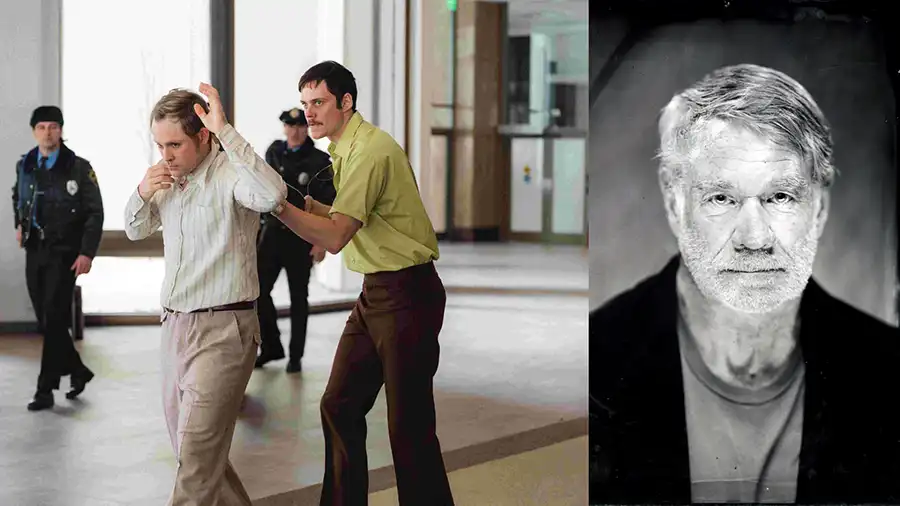
At a Glance
Gus Van Sant’s Dead Man’s Wire (2025) marks his return to feature filmmaking after six years.
The film is based on the true-crime story of Tony Kiritsis and the infamous 1977 Indianapolis hostage standoff. For more, see the documentary Dead Man’s Line.
Bill Skarsgård stars as Kiritsis, with Dacre Montgomery, Al Pacino, Colman Domingo, and Myha’la Herrold in supporting roles.
The story centers on Kiritsis’s grotesque “dead man’s wire” shotgun contraption, which forced national TV networks to broadcast his demands.
Row K Entertainment has acquired North American distribution rights, with WME Independent handling world sales.
Van Sant views the story as eerily relevant today, reflecting modern fascination with vigilantes and distrust of corporate power.
Gus Van Sant stands as a compelling and often paradoxical figure in American cinema, lauded as an indie provocateur, a two-time Oscar nominee, and a leading voice of the New Queer Cinema of the 1990s. His career, spanning four decades as a director, painter, and photographer, is defined by a gentle yet unflinching focus on the marginalized — the sex workers, junkies, hustlers, and loners — people society overlooks. Van Sant states that he relates to these stories, particularly those centered on one individual pitted against an entire system.
His cinematic voice is consistently characterized as deadpan, dreamy, intimate, and disarming. While known for genre-defining works like Drugstore Cowboy (1989), My Own Private Idaho (1991), the Oscar-nominated Good Will Hunting (1997), and the Palme d’Or winner Elephant (2003), Van Sant’s career path is famously erratic, moving from Hollywood success to intense artistic experimentation and back again.
The Formative Years and Indie Roots
Van Sant was born in Louisville, Kentucky, and spent his high school years in Darien, Connecticut, a “hoity-toity community.” Early on, he realized his artistic inclination, winning a prize at a local art show at age 14. He was introduced to experimental film in high school by art and English teachers who showed works by Stan Brakhage and Andy Warhol, leading him to realize that painters sometimes used film as their medium.
He attended the Rhode Island School of Design (RISD), graduating in 1975, choosing to focus on film because the atmosphere in the mid-1970s was not conducive for aspiring painters. After six unsuccessful years trying the “Hollywood hustle” in Los Angeles, he returned east, saved money working in New York advertising, and financed his first widely seen feature.
Mala Noche (1985), adapted from a novel by his friend, Portland poet Walt Curtis, became his breakthrough. Its success — including a prize at the Los Angeles Gay and Lesbian Film Festival — was a major catalyst. Van Sant recognized that focusing on “Gay Cinema” was also a smart business move at the time because that audience lacked related content.
By the time My Own Private Idaho (1991) premiered at the Venice Film Festival, his reputation was cemented. The film, starring River Phoenix and Keanu Reeves, merged street narratives with literary elements, including Shakespeare’s Prince Hal and George Eliot’s Silas Marner, creating a “cinematic collage.”
Navigating Hollywood and Formal Experiments
After his indie success, Van Sant gained an “enviable reputation in Hollywood” as a director who “should be able to do whatever he wants,” allowing him to continue living and shooting primarily in Oregon. He was drawn to scripts about people who were “secretly intelligent but also possessed this secret or personal truth,” such as the characters in Good Will Hunting.
In the late 1990s, he pursued the infamous shot-for-shot remake of Alfred Hitchcock’s Psycho (1998). He pitched it as an “anti-remake statement,” meant to challenge the trend of remaking classics while discarding their original spirit. Though he expected a blockbuster, critics panned it.
This period led to his experimental trilogy in the early 2000s, where he abandoned traditional scripts and used single long takes. Films like Gerry and Elephant captured a distinct “organic” performance vibe, born from continuous action rather than intercutting. Elephant was particularly notable for its endlessly cross-cutting, overlapping action, inspired by Béla Tarr’s Sátántangó. Both Elephant and the Kurt Cobain-inspired Last Days (2005) were built around “non-information” — stories shaped by speculation and media distortion.
In recent years, Van Sant worked in television, directing six episodes of Ryan Murphy’s FX miniseries Feud: Capote vs. The Swans (2024), following a six-year break from features during which he focused on painting.
Dead Man’s Wire Marks Van Sant’s Return
Dead Man’s Wire (2025) is his first feature in six years, following Don’t Worry, He Won’t Get Far on Foot (2018). The true-crime thriller and dark comedy, which premiered out of competition at the Venice Film Festival on September 2, 2025, tells the Tony Kiritsis story. To see how the events actually took place, watch the acclaimed documentary Dead Man’s Line.
The True Story and the Grotesque Contraption
Set in 1977 Indianapolis, the film is based on the true story of Tony Kiritsis, a paranoid former real estate developer who took his mortgage broker, Richard Hall, hostage. He demanded $5 million and a personal apology.
The bizarre method of abduction gives the film its title: Kiritsis held Hall hostage with a sawed-off shotgun, its muzzle wired to the back of Hall’s head with a “dead man’s wire.” If police killed Kiritsis, the shotgun would fire. Hall endured this ordeal for 63 hours in Kiritsis’s apartment, with the weapon jammed to his neck.
The event became a media spectacle, reflecting the volatile atmosphere of the post-Watergate 1970s. Kiritsis even paraded his victim on live TV to read his demands, in what critics described as a horrific display. This sensational chapter of American true crime was first chronicled in Dead Man’s Line, the documentary that provided the foundation for Van Sant’s adaptation.
Cast, Tone, and Production
The film is written by first-time feature screenwriter Austin Kolodney.
Bill Skarsgård and Dacre Montgomery: Skarsgård plays Kiritsis, cast younger than the real man to avoid cliché. Montgomery, 30, portrays the much older Richard Hall, with Van Sant pushing him toward unconventional interpretations. Their intense collaboration shifted the tone of the film from thriller to irreverent dark comedy.
Supporting cast: Al Pacino delivers a cameo as Hall’s dismissive father, Colman Domingo plays a laid-back local DJ pulled into Kiritsis’s scheme, and Myha’la Herrold plays a fictional reporter chasing the scoop.
Filming took place in Van Sant’s hometown of Louisville, Kentucky, which stood in for Indianapolis. Shot over 19 days in freezing winter conditions, the production was described by the cast as guerrilla filmmaking.
Themes and Modern Relevance
Van Sant was drawn to the story for both its local roots and its bizarreness. He portrayed Kiritsis not as a “loser” but as a misguided hero battling corporate indifference, embodying the frustrations of the “everyman” with no agency against larger systems.
He noted the story’s eerie relevance to today, drawing parallels to the romanticizing of vigilantes in modern culture. He referenced the 2024 Luigi Mangione case — where a man accused of killing a healthcare executive was mythologized online — as an example of how real events echoed his film.
Van Sant also drew a link between Dead Man’s Wire and Elephant, as both explore tabloid-driven stories of individuals striking out against perceived injustices. While the killers in Elephant were sociopaths, Kiritsis was fueled by personal affront and desperation, though he was ultimately institutionalized.
Despite premiering without a distributor, Van Sant expressed confidence in the festival circuit strategy and credited securing Al Pacino as crucial for both casting and financing.
He concluded by observing that today’s political climate often feels stranger than fiction: “the real presidency put the imagination of writers to shame,” and society is currently “living through a wilder story than any we could imagine.”