The Tony Kiritsis Live Press Conference
Press play and watch the complete, uncensored Tony Kiritsis press conference.
By February 10, 1977, Indianapolis had been gripped for three days by the surreal hostage drama of Anthony G. “Tony” Kiritsis. The 44-year-old had stormed into mortgage broker Richard Hall’s office, wired a shotgun to Hall’s neck, and forced him into a 63-hour ordeal that paralyzed the city. Police surrounded Kiritsis’ apartment, negotiators pleaded, and journalists reported breathlessly. But what came next turned a local standoff into national infamy: a live press conference unlike anything Americans had ever seen.
As Day 3 of the ordeal drew to a close, Kiritsis demanded cameras and reporters. Police, hoping to prevent bloodshed, allowed the extraordinary request, but Indianapolis Police Chief Eugene Gallagher stipulated that Kiritsis must take the dead man’s line off Dick Hall and come out of his apartment unarmed. Too proud of his shotgun rig or too hyped up over getting his $5 million and other demands met, Tony Kiritsis disregarded that condition and exited his apartment with Hall still wired up.
As news crews gathered in a large recreation room across the parking lot, Kiritsis emerged from his apartment building, his hostage trembling in front of him and headed for all the bright lights. Reporters raised their microphones; television cameras rolled. It was no longer just a crime scene — it was live theater, unfolding in real time across Indiana.
Kiritsis launched into an emotional tirade. He accused the Hall family of cheating him out of his land deal, calling them liars and thieves. What stunned viewers most were his words — laced with obscenities never before heard on American television. He cursed the Halls as “cocksuckers,” shouted that they had “fucked him over,” and promised revenge if his grievances were not recognized. Families watching the evening news sat in disbelief as the airwaves carried not only threats of murder but also raw language that broke every broadcast taboo.
The press conference was equal parts fury and breakdown. One moment Kiritsis raged, veins bulging, warning that Hall’s death would be broadcast live to the world. The next, he sobbed, clutching the microphone, his voice trembling with despair. At one point, it looked as though he might pull the trigger in front of the cameras. Several stations, terrified they were about to televise a killing, abruptly cut their live feeds. Those that didn’t carried images seared into Indiana’s collective memory: a desperate man holding another’s life by a wire.
For Kiritsis, the press conference was more than spectacle — it was a strategy, of sorts. He wanted the public to hear his story, to believe that he was the victim, not the aggressor. He described Hall as a “prisoner of war,” claiming he had fed and housed him fairly. To viewers, however, the justification rang hollow. The contrast was stark: a man insisting he wasn’t crazy while staging what looked very much like a breakdown in front of millions.
Journalists covering the moment later reflected on how unprepared they were for the responsibility thrust upon them. The event forced television into an ethical crisis: should newsrooms continue broadcasting unfiltered threats, or cut away and risk missing history? For many reporters, it was the first time they realized how easily the media could become part of the drama itself, not just observers of it.
The public reaction was just as divided. Some viewers were outraged that television stations had broadcast obscenities and life-or-death threats into their homes during dinner hour. Parents complained their children had been exposed to language and violence never before heard on TV. Others defended the stations, saying the raw broadcast revealed the truth of the situation and gave an unobstructed look into a man’s unraveling mind. The debate over whether the media should have pulled away or continued rolling became a national conversation about the boundaries of live coverage.
The press conference ended almost as suddenly as it began. Police escorted the Kiritsis and Hall to another room and out of the media’s view. A short time later, Kiritsis, drained and tear-streaked, unwired the shotgun from Hall’s neck. To prove his weapon had been live all along, he brushed past police, went outside through a sliding-glass door and fired a single blast into the air. Police immediately rushed in and placed him under arrest, bringing an end to the most harrowing live broadcast the state had ever seen.
In hindsight, the press conference became the defining image of the Kiritsis case. It wasn’t just a hostage situation; it was a national media event that blurred the lines between crime, spectacle, and public trauma. For Hoosiers, it remains a chilling reminder of the day television news stopped being a window on events and became part of the story itself — when Tony Kiritsis held both a man’s life and the nation’s attention by a single wire.
A Time of Hostages
A first-hand account of Tony Kiritis’s bizarro press conference by a reporter who was there
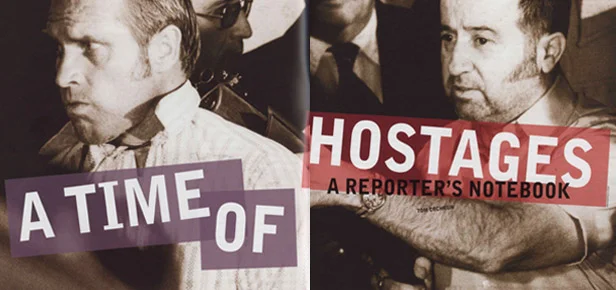
For an excellent account of what it felt like to be in the room for Kiritsis’ live press conference on the night of February 10, 1977, check out this gripping article written by our good friend Tom Cochrun. In later years, he would become an anchor on WTHR’s evening news in Indianapolis, but back in ’77, Cochrun covered the story as a reporter for local radio giant WIBC and has eloquently captured the experience of the whole thing — and in particular the Thursday Night News Conference, in his Trace article “A Time of Hostages: A Reporter’s Notebook.”